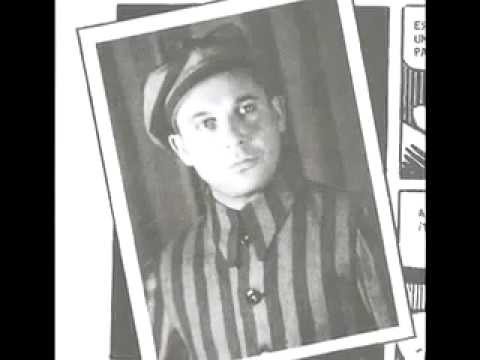
Page 57 Unframed Panels


Page 12 Vladek as a Young Man


Historian Report
On our first day back from “snowmageddon,” or whatever term you prefer to describe last week’s events, we caught up on the updated calendar and learned why 5 paragraph essays suck. More importantly, we talked about our Maus Tracing assignments which are due next week Tuesday and what “gutter boxes” meant.
For our Tracing assignments, we need to keep in mind why we chose those 2 pages out of the Maus series and what they mean to you, and what stands out to you. Also, do not be scared to use “I” in your essays, after all the essay is about why YOU liked the pages. It would be very, very redundant to use “one” in place of the more appropriate “I” to include yourself in the essay. It is better to write an inductive than a deductive one since it helps us formulate bigger ideas about a work that we might have not realized before. Noticing patterns and explaining them is an important aspect of this essay, as well.
An important article we found about why Mr. Spiegelman chose mice to represent Jews in his story: http://www.nybooks.com/blogs/nyrblog/2011/oct/20/why-mice/. This page describes that the oppression of the Jews was similar to containing “vermin”, or rats. The Jews that were caught during the Holocaust were put in concentration camps in “swarms”, or in extremely crowded conditions, where they were then gassed. As the Readers pointed out this week, Art Spiegelman had frequent encounters with his family’s Holocaust history in his dreams and sought to find peace of mind in being able to understand his origins better.
Here are some similarities and differences we found on Tuesday between Fun Home and Maus:
Similarities and differences between Maus and Fun Home.
-
1st person
-
Explicit (F.H.)
-
Ornate language(F.H.)
-
Relationships with Father
-
Relive memories, envision how it happens
-
Both fathers have some compulsive disorder
Another recurring point in Fun Home:
Theres a reference to the myth of Icarus and his fall. (Daedalus and the minotaur)
(Credit to NYbooks.com for the article)
Another studio hour added
Mike met with me yesterday. Adam and Alex came by the studio hour today. The other 14 of you have one more opportunity to come by and work together on the Tracing Maus project: I’ve reserved the Kemp Malone conference room (Callaway N301, one floor above where our class meets) on Friday from 1:30-2:30. You can get ideas from each other and ask me questions as you work. Take advantage of it if you can.
Update: Kemp Malone is a conference room without computers to use, so bring your laptops!
Readers 2/17
Spiegelmen writes Maus as an autobiography to illustrate the grieved past of his parents, as survivors of the Holocaust, but also to demonstrate his own relationship with his parents as it was influenced by their hardships in the Holocaust. Art, throughout the comic, uses past and present scenes to demonstrate the influences the Holocaust had not only to those who experienced it first hand, but also to future generations to come. One such example is seen at the end of Maus II, Vladek mistakenly addresses Art as “Richieu” before closing the book. Richieu, was Anja and Vladek’s first born son who died at an early age, as a result of the Holocaust. This may be a subtle hint as to why Art wrote the book. Perhaps he wrote it not only to foretell the life of his father but to add to it a long list of personal accounts. Maus I and Maus II are written as both Art’s and his father’s stories.

Credit goes to: http://www.hoodedutilitarian.com/2013/12/maus-and-marketing/
In Chapter 2 of Maus II on page 48, there’s a panel depicting Art sitting atop a mound of perished Jews at his art table. He states that he is “depressed” despite his success. Art steps out of the storytelling frame to comment on the fact that the commercial success of his book wasn’t what he was aiming for, or the effects of it didn’t satisfy him enough. At first glance, it may have been seen as a duty to his parents to recall their experiences, but he may have written it as a personal closure and outpouring of how it affected him.
Nikki Ciesinski 2014-02-17 23:14:32
One of my best friends took this photo during a rehearsal this past summer. When I see it, the photo reminds me of my passion, my lifelong friends, my most rewarding life experiences, and my family both back at home and wherever my life will take me.

Updated calendar again
Because of the chaos of last week, I’ve once again updated the calendar. Here’s what we’ve got coming up this week:
- T, Feb 18 11:30 am to 12:30 pm in Callaway N203: Studio times for Tracing Maus assignment
- T, Feb 18 Catch up on Maus & Tracing assignment. [Postponed the start of Fun Home until Tuesday. We’ll reset, discuss both books of Maus and questions you have about the Tracing Maus assignment.]
- Wed, Feb 19 10:00 to 11:00 am in Callaway N203: Studio times for Tracing Maus assignment [Rescheduled from earlier this week, since we lost that day to the snow too.]
- Th, Feb 20 UC chpt 9 & Fun Home “Old Father, Old Artificer”
- T, Feb 25 Tracing Maus assignment due. [Moved the due date back to Tuesday, to give you a little extra time after the studio time & discussion on 2/18]
Should we talk about the weather?

I can’t believe we’ve lost yet more class meetings to snow. Someone must have missed the memo that Emory is in Atlanta.
I’ve had to reschedule my conference yet again as a result of this latest weather event. I’ve spent the day canceling flights, catering orders, room reservations, dinner reservations, and starting to look into dates in the future when we can reschedule the event.
Here’s why this matters to you: if Emory is opened on Thursday, then we’ll have class since I won’t be at my conference. This would bring us back more or less on track.
The reader response for this week was posted earlier today–you should all read and think about it. I’d suggest leaving comments on the post if you have thoughts or questions. The responders do not need to get something posted tomorrow. I’ll give the responders and historians some further instructions about those posts on Thursday, which will vary depending on whether we have class or not.
In the meantime, there are two assignments for you to work on between now and Thursday:
First, I’d like you to work on your domains. If you haven’t changed your theme yet, do so. Make certain that the front page is a static page, not a posts page. Choose an image to go on your home page, preferably a photo of yourself. Write a paragraph or two of text for your home page, welcoming readers to your site and giving some sense of your interests and affiliations. I will create and post a badge for myself like the badges I had you make and I’ll ask you to insert the badge on your site and have it link back to my page here. I’ll also ask you to insert some text indicating that you’re taking part in the Domain of One’s Own pilot and to insert the Domain badge on your site.
Second, join in on the first #allwrite collaborative Google doc before midnight on Wednesday. Here’s the text announcing the project & providing further instructions, written by Janine Debaise:
This week, my students are going to take the lead in setting up a google document that explores the environmental implications of the food we eat. (They figured it was a universal topic — everyone eats food!) We’re hoping to get as many people as possible contributing.We plan to begin on Tuesday at 1 pm EST and end Wednesday at midnight EST. (Let us know if you think your students need more time — we can extend it.)My #nifkin students will use Eustace B. Nifkin — a legendary, unofficial student — to spread the news.On twitter, tell your students to follow @follownifkinOr if they prefer Facebook, they can follow Nifkin here:Or they can check out Nifkin’s blog:Or they can follow Nifkin on Google+By Tuesday at 1 pm, we should have instructions up everywhere.Or if you’d like to just give them direct links, you can use these bit.ly links:REMIND YOUR STUDENTS AND FRIENDS TO SIGN THEIR NAMES AT THE BOTTOM.Since I only have 20 students in the class, they are really hoping for participation from some of your students. I keep telling them that there are students in Georgia who want to collaborate with us ….
This sort of collaborative writing is probably best done from home anyway, so it’s the perfect activity to take the place of classtime missed because of a snow day.
Leave comments here if you have any questions at all. More tomorrow!
Readers 2/10
Earlier in Maus II, we see Art have a hard time managing what he calls “survivor’s guilt”. He clearly admits a sense of guilt or sorrow for not having gone through the same tragedy that his father and other relatives had to go through. That idea comes into great contrast with Art’s actions during the last chapters of Maus II. In my opinion, somehow who actually feels such guilt, to the point that they must go to a psychiatrist like Art did, would spend as much time as possible trying to make it up to their father. Yet in Chapter 4, we repeatedly see Art acting selfishly, choosing to inconvenience his father over himself. For example, he refuses to move in with his father as in his opinion his father paying for an in house nurse is much better than inconveniencing his own life. Further, he changes the topic of conversation when Vladek asks him to install his windows, eventually saying that Vladek should “pay a bit more for heat for a few days longer” rather than inconvenience his son. Finally, rather than discuss issues that are actually relevant to Vladek’s life such as his deteriorating health or his relationship with Mala, Art prefers to discuss the events of the Holocaust so that he can finish his book. This battle between guilt and selfishness really caught my attention because it is hard to believe he feels so guilty, which it seemed he did during the psychiatrist scenes, when he comes back and acts so unconcerned towards his father.

In chapter five of Maus II, we see a profound change in the direction of the “emotions” the author is trying to illicit. Art Spiegelman adds an actual image of Vladek adorned in the striped garments that the holocaust is known for. Previously in the graphic novel all the Jews were depicted as similar looking mice, with barely any distinguishable features. The addition of this image gives the reader a much more intimate relationship to the graphic novel and to Vladek as an individual. This contrasts the previous relationship with an anonymous mass of people indistinguishable from one another. Throughout the graphic novel we have pictured the pain and suffering experienced by Vladek, but as a mouse. Now that we have seen an actual image we can associate the pain and suffering with a human face. This is because we can empathize more easily with a human than with a mouse.